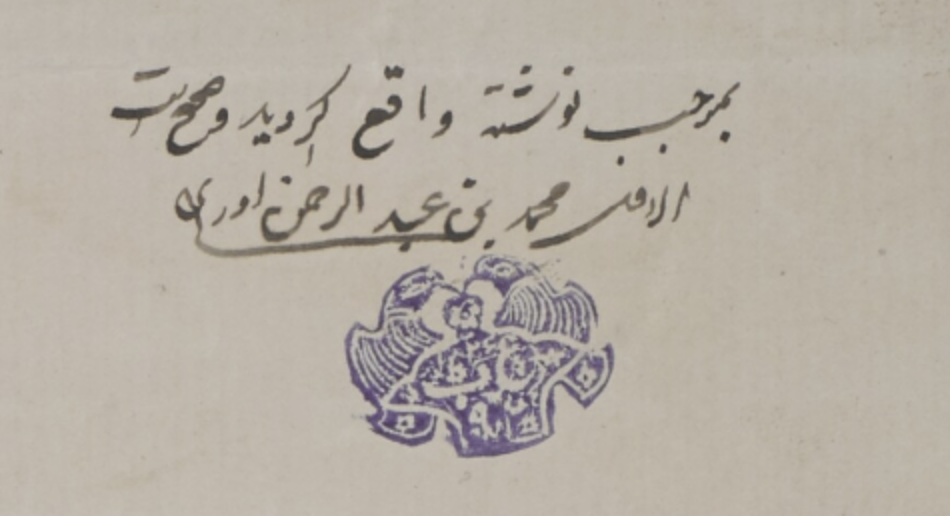
Seal of Muhammad bin ʿAbd al-Rahman Awazi (Awadhi) Among the Prominent Residents of Dubai, 1910–1911
ختم محمد بن عبدالرحمن العوضي، أحد أعيان دبي آنذاك، 1910–1911
- Category
- Seals & Identity
- Document type
- Letter
- Year
- 1910
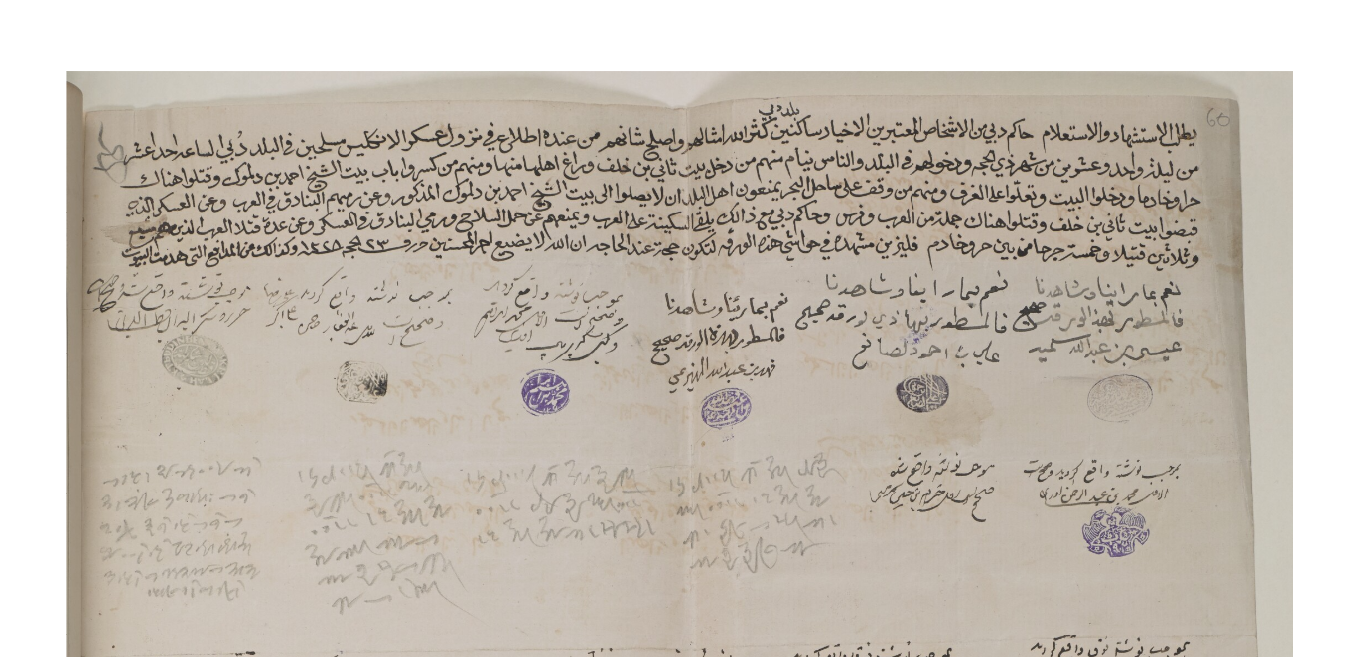
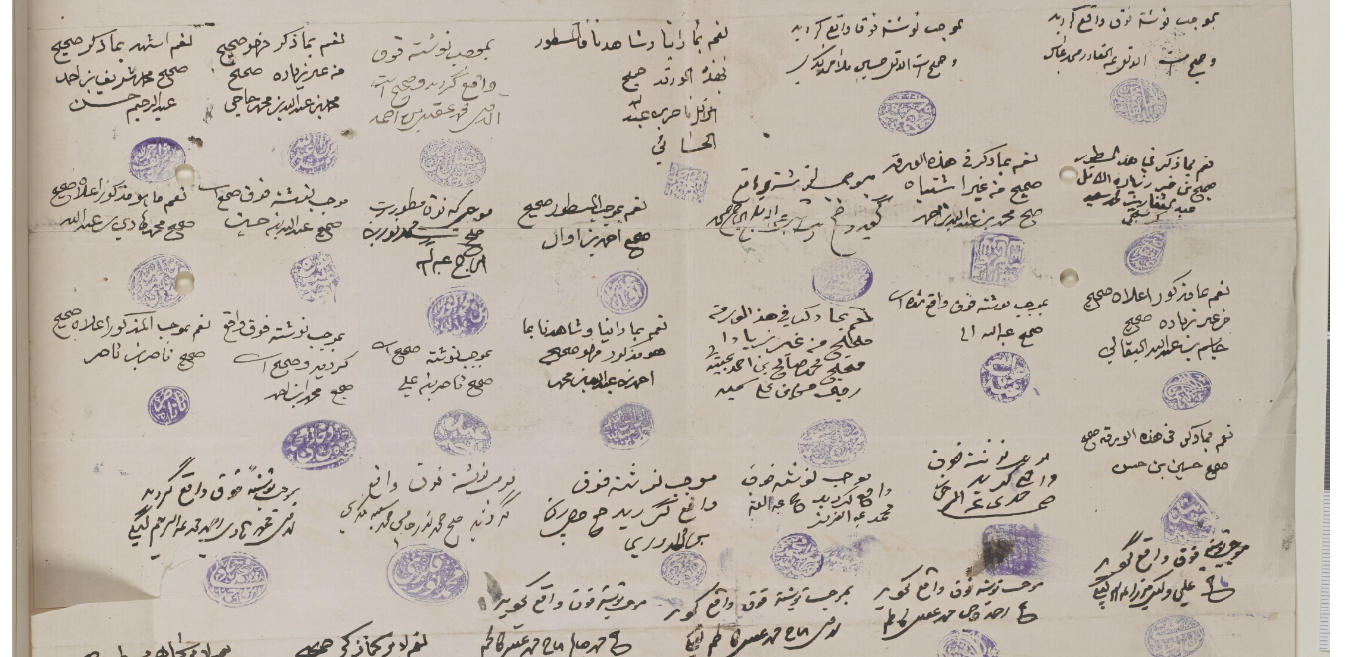
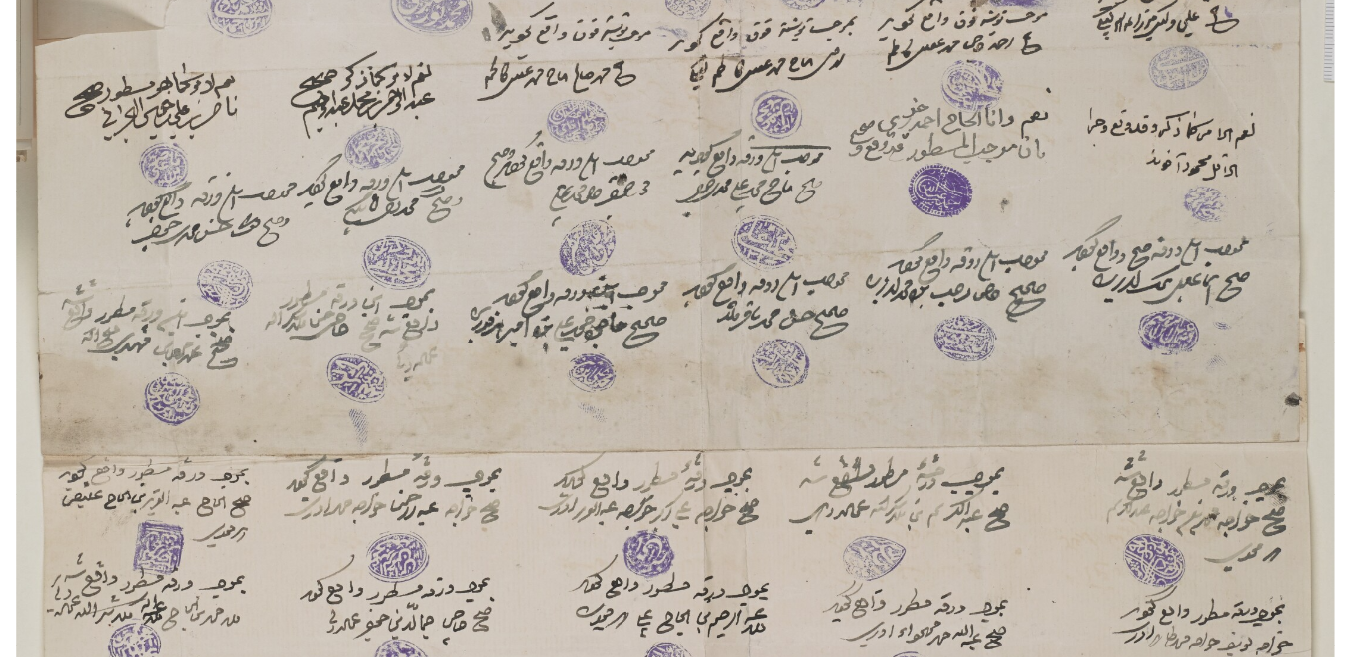
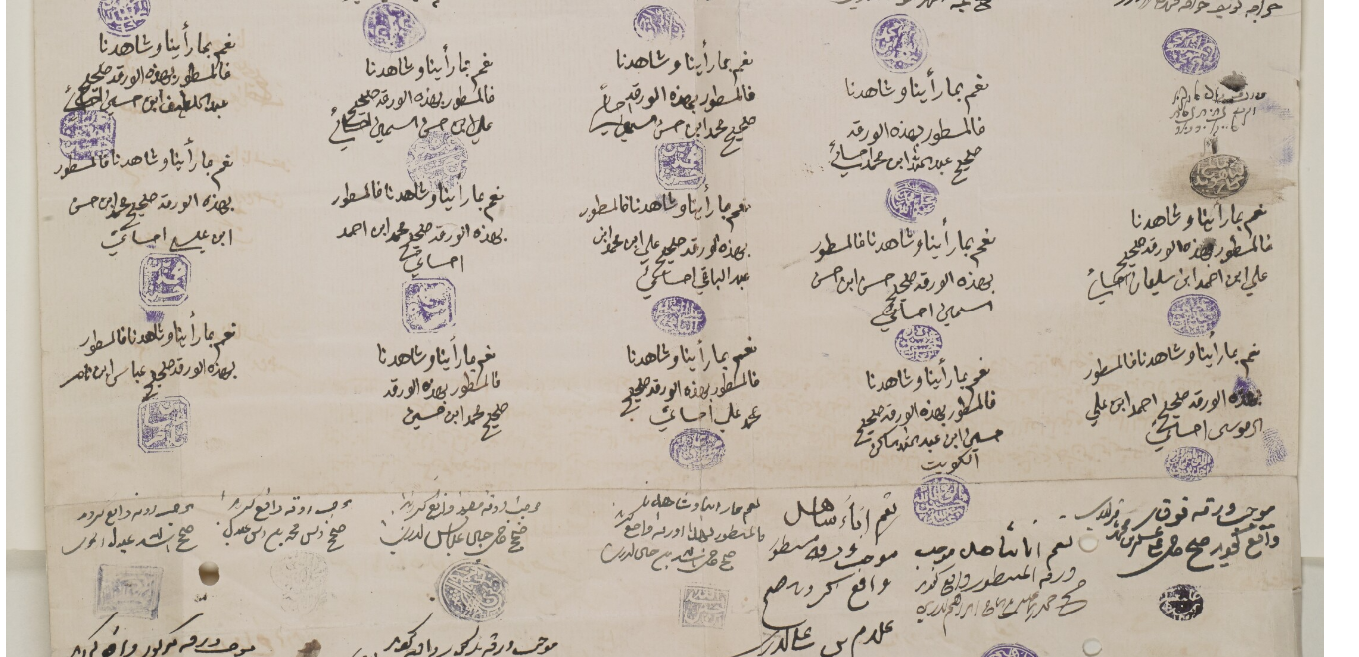
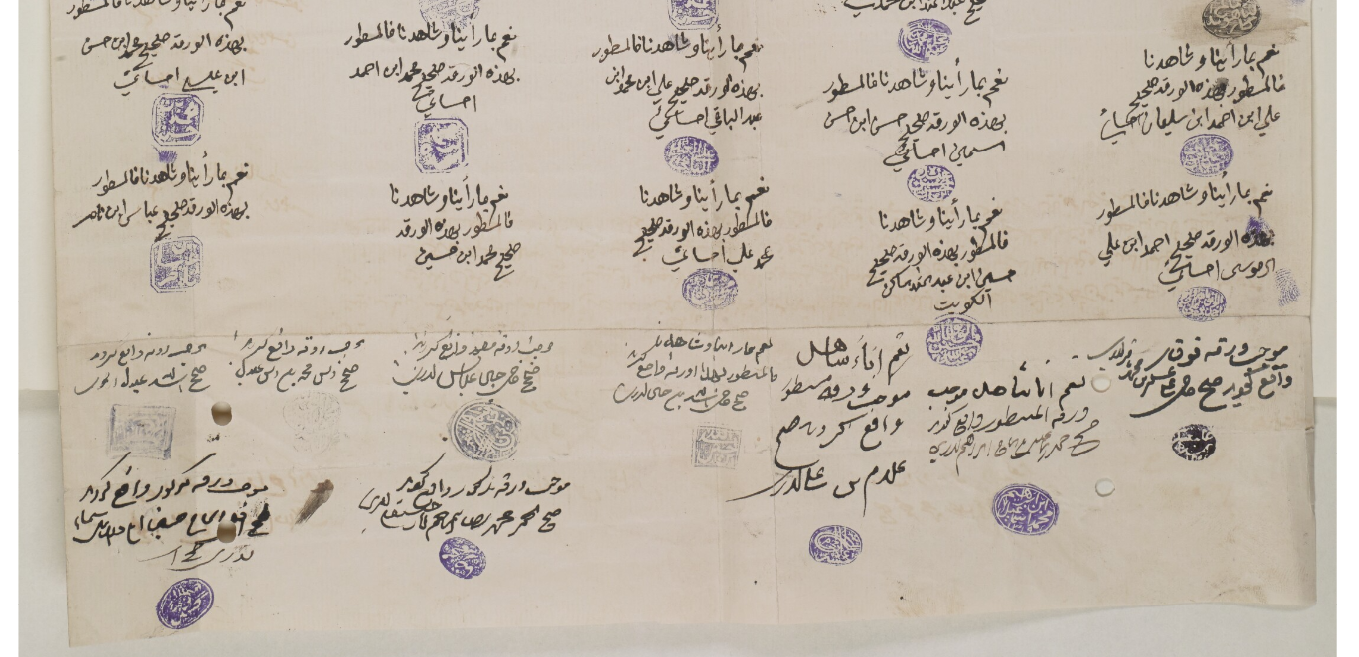
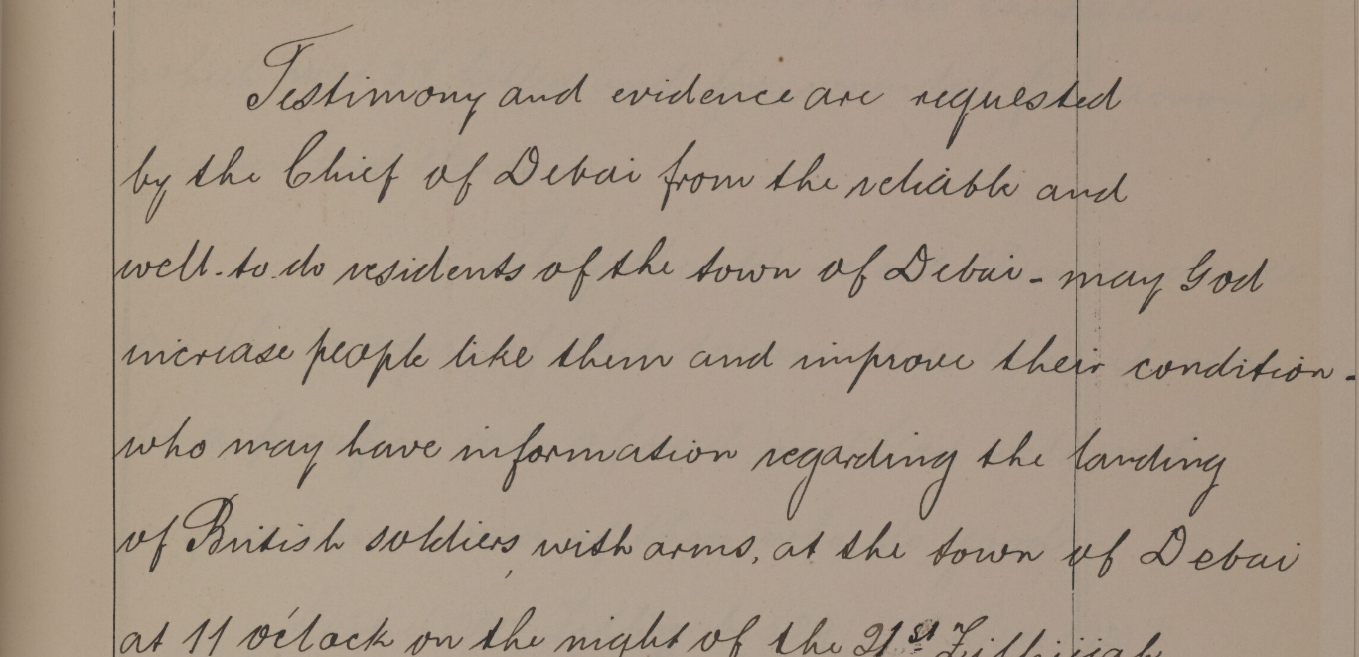
A British archival record concerning the Dubai Incident of 1910 identifies Muhammad bin ʿAbd al-Rahman Awazi (Awadhi) as one of the prominent inhabitants of Dubai who endorsed a collective witness statement following the violent confrontation between local residents and a British landing party on 24 December 1910. The statement was authenticated by the seals and declarations of leading residents of Dubai. The British Library's analysis identifies Muhammad bin ʿAbd al-Rahman Awazi (Awadhi) as the owner of a distinctive personal seal depicting two stylised birds, possibly Pterocles. Unlike other Islamic seals, which frequently feature a variety of geometric or abstract designs, and rather than the text or pictorial designs used in Western seals, this seal depicts two birds. The unusual bird design means that the seal is, in all likelihood, a relatively modern Islamic seal. This appears to be borne out by the numbers inscribed on the seal. The smaller, four digit number appears first and seems to be 1224 or possibly 1234. This might represent the year the seal was made. The Hijrī year 1224 and 1234 correspond to 1809–10 or 1818–19 respectively. The larger two-digit number below it is 92, which may indicate the Hijrī year 1292, or 1875–76 in the Gregorian calendar. The accompanying British record describes those represented in the document as among the reliable and well-to-do residents of Dubai. His inclusion therefore provides evidence for the presence of a man bearing the Awadhi name among Dubai's established community in the early twentieth century. The Arabic handwriting above each seal in the document is either a declaration and a signature or a declaration only (folio 60), presumably because the name inscribed in the seal was generally seen as a signature in any case. Still, the names of all those signing the document were listed at the foot of the translated account, in English. It is clear that none of these are signatures as the list has been added in a single hand. Instead these were most likely added by the British official who translated the Sheikh’s reply and enclosed testimony to the British Resident. The Qatar Digital Library notes that the designation “Awazi” may refer to Avaz/Evaz in Fars, Persia. His declaration was also written in nastaʿlīq, a script strongly associated with Persianate written culture, providing additional evidence of a possible connection with that region. Primary Archive Reference British Library — India Office Records and Private Papers File: File 9/50 (B 16) The Debai Incident Reference: IOR/R/15/1/235 Relevant folios: ff. 55–60 The file covers the Dubai Incident and subsequent correspondence between 25 December 1910 and 7 August 1912. The witness statement includes the signatures, declarations and seals of leading inhabitants of Dubai. Digital Source Qatar Digital Library / British Library Catherine Hodgkinson, Archival Specialist, British Library, “Guns ‘n’ Seals: An Unusual Seal indicates Cultural Influences in Dubai in 1910,” published 4 December 2015.
تتضمن وثيقة محفوظة ضمن السجلات البريطانية المتعلقة بـ حادث دبي سنة 1910 اسم محمد بن عبدالرحمن العوضي ضمن مجموعة من أعيان وسكان دبي البارزين الذين أقرّوا إفادة جماعية حول المواجهة المسلحة التي وقعت بين سكان محليين وقوة بريطانية نزلت إلى دبي في 24 ديسمبر 1910. وقد جرى توثيق الإفادة من خلال أختام وإقرارات عدد من أبرز سكان دبي. وتحدد دراسة المكتبة البريطانية محمد بن عبدالرحمن العوضي باعتباره صاحب ختم شخصي مميز يحمل صورة طائرين متقابلين، يحتمل أن يكونا طيور من نوع القطا. على عكس الأختام الإسلامية الأخرى، التي غالباً ما تتضمن مجموعة متنوعة من الأشكال الهندسية أو التصاميم التجريدية، وبخلاف النصوص أو التصاميم التصويرية المستخدمة في الأختام الغربية، يُظهر هذا الختم طيور. يشير تصميم الطائر غير المعتاد إلى أن الختم هو، على الأرجح، ختم إسلامي حديث نسبيًا. ويبدو أن الأرقام المنقوشة على الختم تؤكد ذلك. يظهر الرقم الأصغر المكون من أربعة أرقام أولاً، ويبدو أنه 1224 أو ربما 1234. وقد يمثل هذا الرقم السنة التي صُنع فيها الختم. ويوافق العامان الهجريان 1224 و1234 السنتين 1809–1810 أو 1818–1819 على التوالي. أما الرقم الأكبر المكون من رقمين الموجود أسفله فهو 92، وهو ما قد يشير إلى العام الهجري 1292، أو 1875–1876 حسب التقويم الميلادي. الكتابة العربية اليدوية الموجودة فوق كل ختم في الوثيقة هي إما إقرار وتوقيع أو إقرار فقط (الصفحة 60)، ويرجح أن ذلك يرجع إلى أن الاسم المنقوش في الختم كان يُنظر إليه عموماً على أنه توقيع في جميع الأحوال. ومع ذلك، أُدرجت أسماء جميع الموقعين على الوثيقة في أسفل النص المترجم، باللغة الإنجليزية. ومن الواضح أن أياً من هذه الأسماء ليس توقيعاً، حيث أُضيفت القائمة بخط يد واحد. بل من المرجح أن يكون المسؤول البريطاني الذي ترجم رد الشيخ وشهادته المرفقة إلى المقيم البريطاني هو من أضافها. وتشير الوثائق البريطانية إلى أن الأشخاص الواردة أسماؤهم ضمن هذه الإفادة كانوا من سكان دبي الجديرين بالثقة والميسورين، ما يجعل ورود اسمه دليلاً أرشيفياً مهماً على وجود شخص يحمل نسبة «عوضي» ضمن المجتمع المستقر والبارز في دبي في مطلع القرن العشرين. وتشير مكتبة قطر الرقمية إلى احتمال ارتباط نسبة «عوضي» بمنطقة عوض (Evaz) في محافظة فارس ببلاد فارس. كما كُتب إقراره بخط النستعليق المرتبط تاريخياً بالثقافة الكتابية الفارسية، وهو ما يوفر قرينة إضافية على احتمال وجود صلة بتلك المنطقة. مرجع أرشيفي أساسي المكتبة البريطانية — سجلات مكتب الهند والوثائق الخاصة الملف: الملف 9/50 (B 16) حادثة دبي المرجع: IOR/R/15/1/235 الصفحات ذات الصلة: الصفحات 55–60 يغطي الملف حادثة دبي والمراسلات اللاحقة في الفترة ما بين 25 ديسمبر 1910 و7 أغسطس 1912. تتضمن إفادات الشهود توقيعات وإقرارات وأختام كبار سكان دبي. المصدر الرقمي مكتبة قطر الرقمية / المكتبة البريطانية كاثرين هودجكينسون، أخصائية أرشيف، المكتبة البريطانية، «البنادق والأختام: ختم غير عادي يشير إلى التأثيرات الثقافية في دبي عام 1910»، نُشر في 4 ديسمبر 2015.