British Export Licences for Rifles and Ammunition to Mir Mohammad Saleh Amiri Alawadi in Dubai, 1967–1968
تراخيص بريطانية لتصدير البنادق والذخائر إلى مير محمد صالح أميري العوضي في دبي، ١٩٦٧-١٩٦٨
- Category
- Institutional Documents
- Document type
- Letter
- Year
- 1967
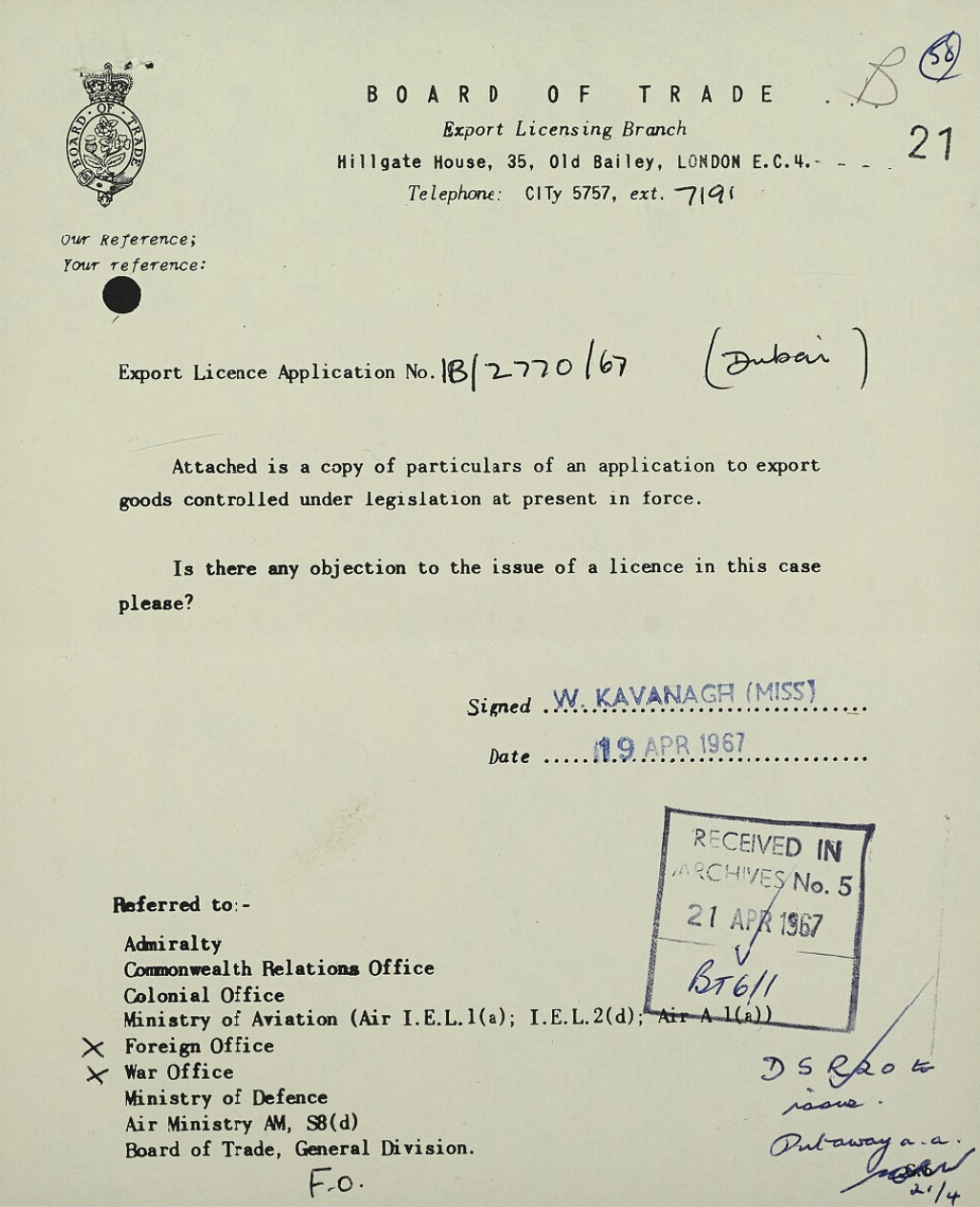
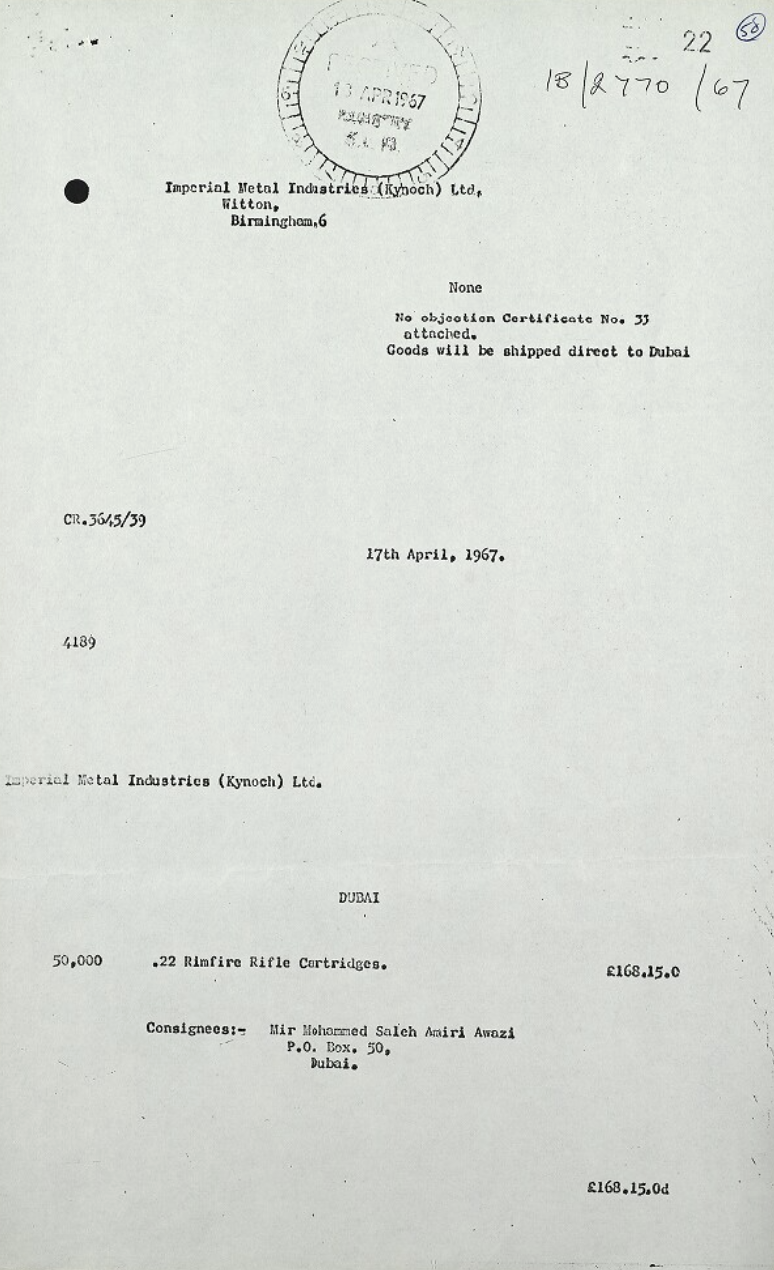
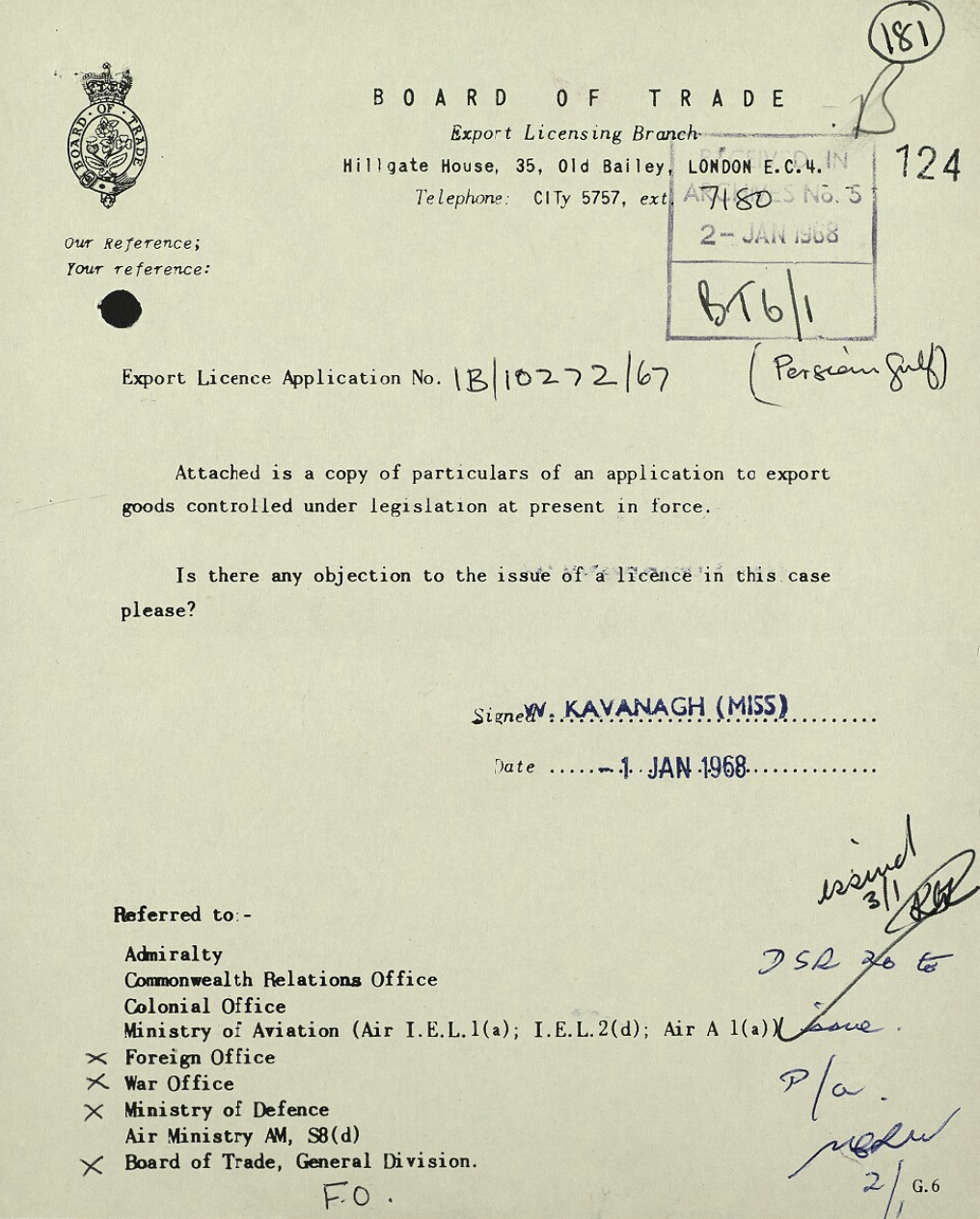
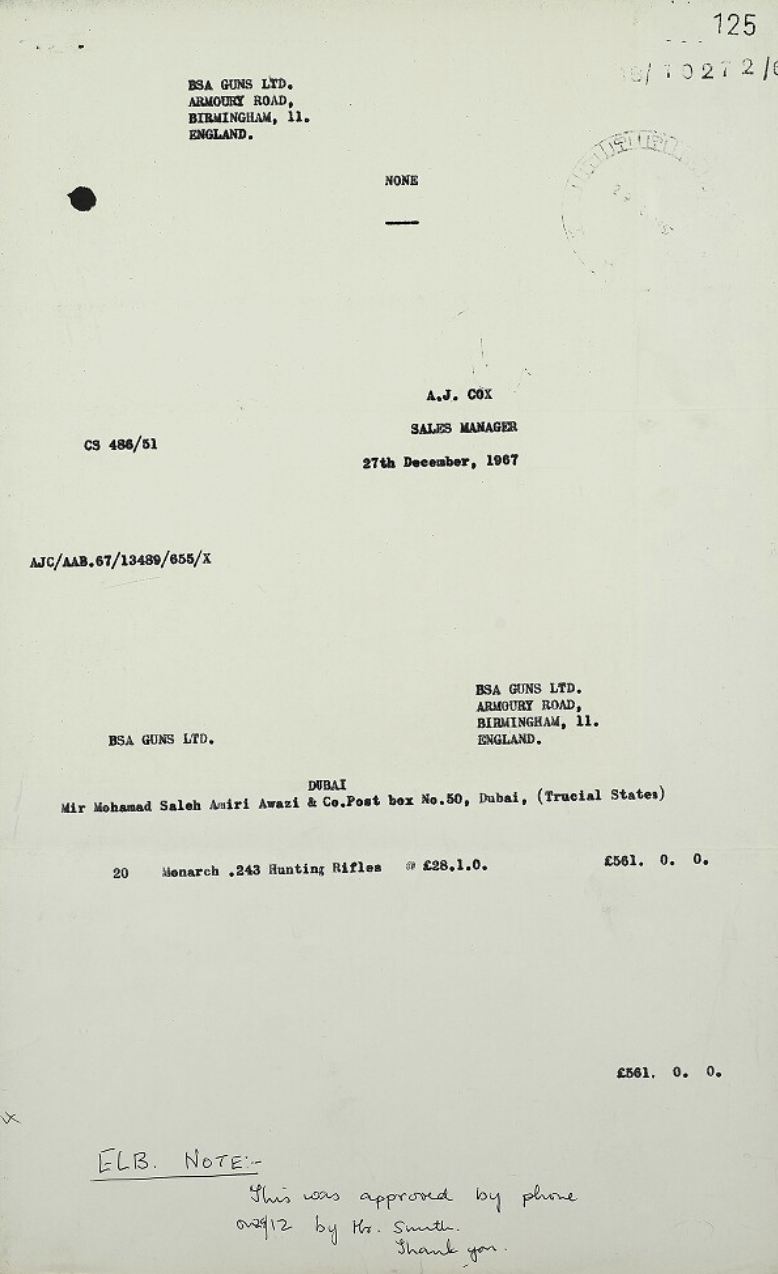
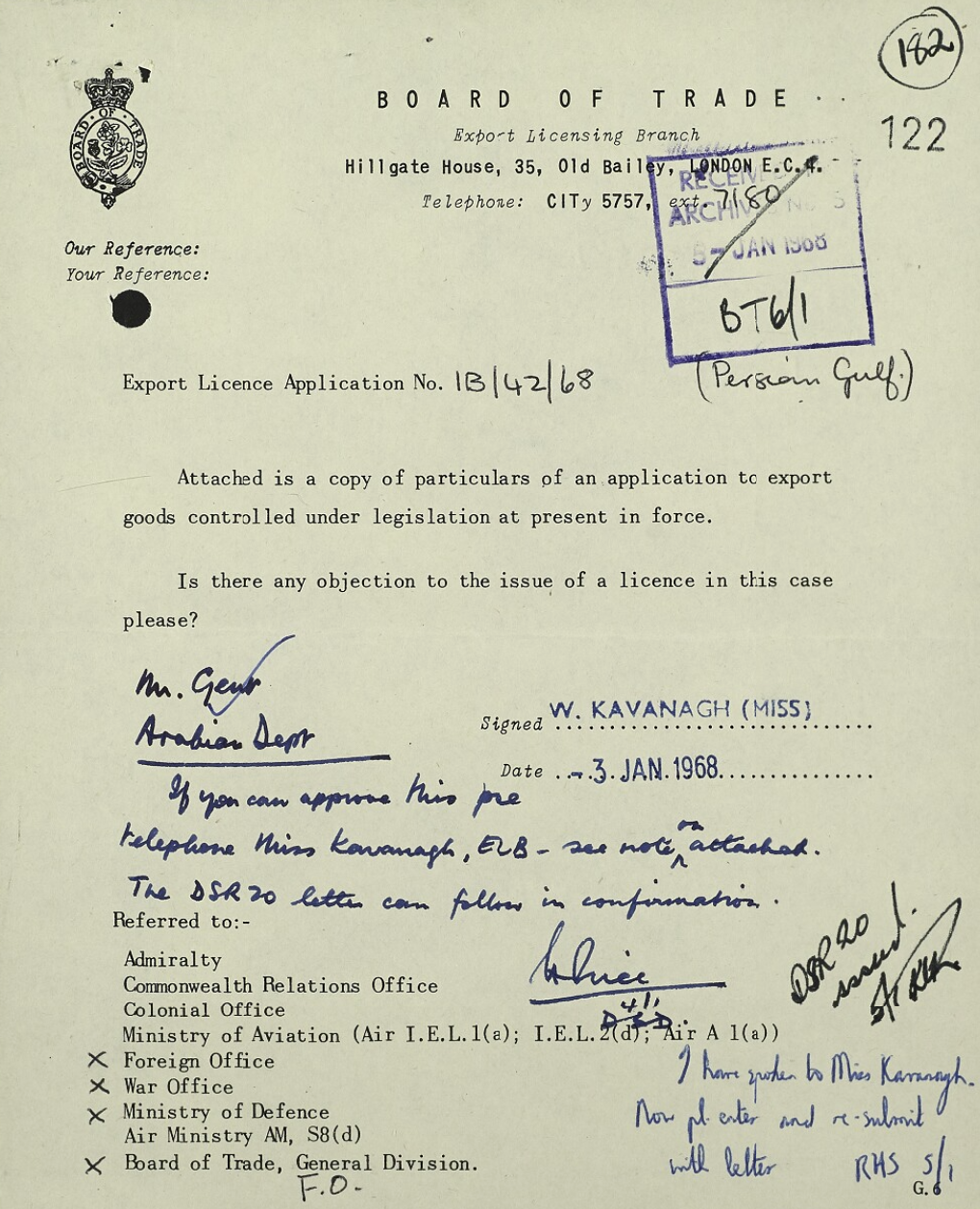
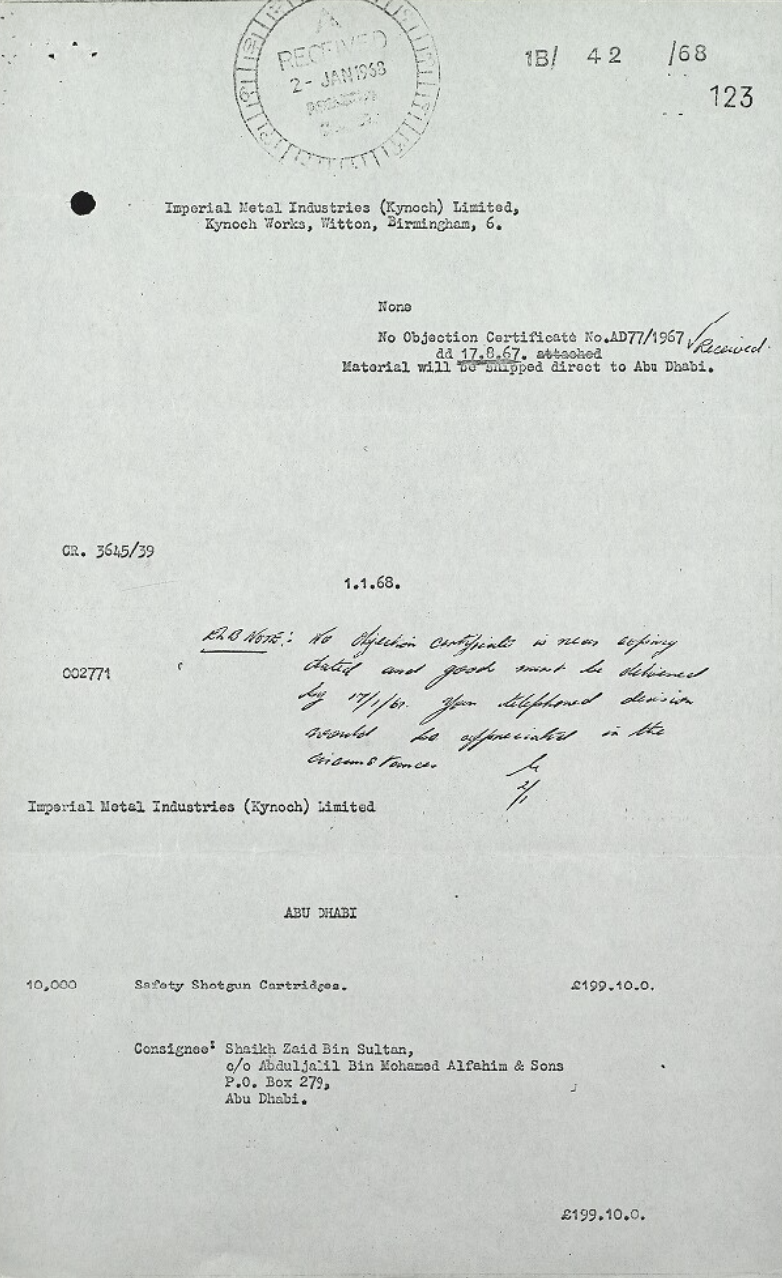
Issuing Authority: British Board of Trade – Export Licensing Branch, in consultation with the Foreign Office, War Office and Ministry of Defence Supporting Companies: Imperial Metal Industries (Kynoch) Limited and BSA Guns Limited References: IB/2770/67; IB/10272/67; IB/42/68; CR.3645/39 Subject: Licensed Direct Export of Rifles and Ammunition to Mir Mohammad Saleh Amiri Alawadi, in Dubai Date: April 17, 1967 – January 3, 1968 These documents form a group of British export-control records concerning the direct shipment of rifles and ammunition from the United Kingdom to Mir Mohammad Saleh Amiri Alawadi & Co., P.O. Box 50, Dubai, Trucial States. His name appears in the British documents as “Mir Mohamed Saleh Amiri Awazi” or “Mir Mohamad Saleh Amiri Awazi.” For archival publication, the name may be rendered as Mir Mohammad Saleh Amiri Alawadi [recorded in the British file as “Awazi”]. The first transaction concerned the export by Imperial Metal Industries, through its Kynoch ammunition division, of 50,000 .22 rimfire rifle cartridges to Mir Mohammad Saleh in Dubai. The commercial particulars, dated April 17, 1967, valued the consignment at £168 and 15 shillings and stated that the goods would be shipped directly to Dubai. A no-objection certificate numbered 33 was attached to the application. Two days later, on April 19, 1967, the British Board of Trade opened Export Licence Application IB/2770/67. Because the shipment consisted of goods controlled under the legislation then in force, the application was referred to the Foreign Office and War Office before the export licence could be issued. A second and more substantial case concerned an order placed with BSA Guns Limited for 20 BSA Monarch .243 hunting rifles, addressed directly to Mir Mohamad Saleh Amiri Awazi & Co. in Dubai. The invoice, dated December 27, 1967, valued the rifles at £561. The corresponding Board of Trade application, IB/10272/67, was processed at the beginning of January 1968 and circulated to the Foreign Office, War Office, Ministry of Defence and the Board of Trade’s General Division. A handwritten note indicates that approval had initially been communicated by telephone, with written confirmation to follow. Significance of the Documents The records demonstrate that Mir Mohammad Saleh was not merely purchasing an individual sporting weapon. The quantities involved—50,000 rounds of rifle ammunition and 20 hunting rifles—were commercial or distributive in scale. The use of the company designation “& Co.” further indicates that the shipment was connected to an established trading enterprise rather than solely to private personal use. The goods were expressly described as being controlled under British legislation. Their export therefore required formal licensing, supporting no-objection documentation and referral among several British government departments. The documents show that Mir Mohammad Saleh was accepted as the named consignee and was permitted to receive these controlled goods directly in Dubai. The importance of this status becomes clearer when the file is compared with the attached application concerning 10,000 safety shotgun cartridges consigned to Sheikh Zayed bin Sultan Al Nahyan in Abu Dhabi. That shipment, supplied by the same Kynoch organisation, required No-Objection Certificate AD77/1967 and underwent the same Board of Trade licensing and interdepartmental review process. When the certificate approached or passed its period of validity, British officials sought further confirmation before allowing the transaction to proceed. The Sheikh Zayed file demonstrates that the licensing procedure was substantive rather than a routine commercial formality. Even a consignment intended for the Ruler of Abu Dhabi required a valid certificate and formal government clearance. Against this background, the approval of large direct shipments to Mir Mohammad Saleh Alawadi is significant evidence that he was regarded as a recognised and acceptable commercial consignee within the tightly regulated arms and ammunition trade of the period. These documents constitute rare archival evidence of the commercial standing enjoyed by Mir Mohammad Saleh Amiri Alawadi in Dubai during the late 1960s. They show that his company was authorised to import significant quantities of rifles and ammunition directly from major British manufacturers and that the British authorities were prepared to process and approve such transactions through the formal export-control system. The records support the conclusion that he possessed an elevated level of commercial credibility, official confidence and access to regulated international trading channels. The comparison with the contemporaneous shipment to Sheikh Zayed bin Sultan further illustrates the select and closely supervised environment in which these transactions occurred. The documents do not expressly state that arms and ammunition could legally be sold only to rulers or persons personally close to them. The strongest defensible conclusion is that these goods were strictly controlled, that access was selective and subject to official approval, and that Mir Mohammad Saleh Alawadi was recognised as a trusted or approved consignee capable of receiving unusually large direct shipments.
الجهة المُصدِرة: مجلس التجارة البريطاني – فرع تراخيص التصدير، بالتنسيق مع وزارة الخارجية ووزارة الحرب ووزارة الدفاع الشركات المورّدة: شركة إمبريال ميتال إندستريز «كينوك» المحدودة، وشركة BSA Guns Limited المراجع: IB/2770/67؛ IB/10272/67؛ IB/42/68؛ CR.3645/39 العنوان: تراخيص التصدير المباشر للبنادق والذخائر إلى مير محمد صالح أميري العوضي في دبي التاريخ: 17 أبريل 1967 – 3 يناير 1968 تضم هذه المجموعة عدداً من وثائق الرقابة البريطانية على تصدير الأسلحة، وتتعلق بشحن بنادق وذخائر بصورة مباشرة من المملكة المتحدة إلى شركة مير محمد صالح أميري العوضي وشركاه، ص.ب. 50، دبي، الساحل المتصالح. وقد ورد الاسم في الوثائق البريطانية بصيغتي “Mir Mohamed Saleh Amiri Awazi”و“Mir Mohamad Saleh Amiri Awazi”. ومن الأنسب عند نشر الوثيقة أرشيفياً كتابة الاسم على النحو الآتي: مير محمد صالح أميري العوضي [الوارد في السجل البريطاني بصيغة “Awazi”]، حفاظاً على النص الأصلي مع توضيح هوية الاسم. تتعلق المعاملة الأولى بطلب تقدمت به شركة إمبريال ميتال إندستريز، من خلال قسم الذخائر التابع لها «كينوك»، لتصدير 50 ألف طلقة من ذخيرة بنادق الرماية عيار .22 Rimfire إلى مير محمد صالح في دبي. وقد بلغت قيمة الشحنة 168 جنيهاً إسترلينياً و15 شلناً، ونصت الوثيقة المؤرخة في 17 أبريل 1967 على أن البضاعة ستُشحن مباشرة إلى دبي. كما أُرفقت بالمعاملة شهادة عدم ممانعة تحمل الرقم 33. وفي 19 أبريل 1967، فتح مجلس التجارة البريطاني طلب رخصة التصدير رقم IB/2770/67. ونظراً إلى أن الذخائر كانت من السلع الخاضعة للرقابة بموجب التشريعات البريطانية السارية آنذاك، فقد أُحيل الطلب إلى وزارة الخارجية ووزارة الحرب قبل إصدار الترخيص. أما المعاملة الثانية فتتعلق بطلب توريد 20 بندقية صيد من طراز BSA Monarch عيار .243، موجهة مباشرة إلى مير محمد صالح أميري العوضي وشركاه في دبي. وتُظهر الفاتورة الصادرة عن شركة BSA Guns بتاريخ 27 ديسمبر 1967 أن قيمة البنادق بلغت 561 جنيهاً إسترلينياً. وجرى التعامل مع الطلب في مجلس التجارة تحت المرجع IB/10272/67 في مطلع يناير 1968، وأُحيل إلى وزارة الخارجية ووزارة الحرب ووزارة الدفاع والقسم العام في مجلس التجارة. كما تشير ملاحظة بخط اليد إلى أن الموافقة الأولية نُقلت هاتفياً، على أن يتبعها تأكيد مكتوب. دلالة الوثائق لا تشير الكميات المذكورة إلى شراء سلاح فردي للاستخدام الشخصي فحسب، بل إلى عملية ذات نطاق تجاري أو توزيعي؛ إذ تضمنت الشحنات 50 ألف طلقة و20 بندقية صيد. كما أن ورود عبارة “وشركاه” في اسم المستورد يدعم أن المعاملة كانت مرتبطة بنشاط تجاري قائم، وليست مجرد عملية شراء خاصة. وتصف وثائق مجلس التجارة هذه المواد صراحة بأنها سلع خاضعة للرقابة وفق التشريعات السارية. ولذلك لم يكن من الممكن تصديرها باعتبارها بضائع تجارية عادية، بل تطلبت رخصة رسمية وشهادة عدم ممانعة ومراجعة من عدة جهات حكومية بريطانية. وتُثبت الوثائق أن مير محمد صالح كان مقبولاً لدى السلطات بوصفه المستلم الرسمي للشحنات، وأنه حصل على الموافقة اللازمة لتوريد هذه المواد مباشرة من المصانع البريطانية إلى دبي. وتزداد أهمية هذه المكانة عند مقارنة معاملاته بالوثيقة المرفقة الخاصة بتصدير 10 آلاف طلقة خرطوش صيد آمنة إلى الشيخ زايد بن سلطان آل نهيان في أبوظبي. فقد كانت تلك الشحنة، الموردة من مؤسسة كينوك نفسها، خاضعة لشهادة عدم ممانعة رقم AD77/1967، كما عُرضت على مجلس التجارة والجهات الحكومية البريطانية المختصة. وتوضح الملاحظات المدونة على معاملة الشيخ زايد أن انتهاء صلاحية شهادة عدم الممانعة أو تأخر التسليم كان يستدعي طلب تأكيد أو موافقة جديدة، وهو ما يدل على أن الرقابة كانت فعلية وليست مجرد إجراء شكلي، حتى عندما كانت الشحنة مخصصة لحاكم أبوظبي. وفي هذا السياق، يُعد السماح بتصدير كميات كبيرة من البنادق والذخائر مباشرة إلى مير محمد صالح العوضي دليلاً مهماً على أنه كان يُعامل بوصفه تاجراً أو مستورداً معترفاً به، ويتمتع بدرجة مرتفعة من الثقة والأهلية الرسمية للدخول في تجارة كانت شديدة التنظيم والحساسية. الاستنتاج تمثّل هذه الوثائق دليلاً أرشيفياً نادراً على المكانة التجارية التي كان يتمتع بها مير محمد صالح أميري العوضي في دبي خلال أواخر ستينيات القرن العشرين. فهي تُظهر أن شركته كانت مخولة باستيراد كميات كبيرة من البنادق والذخائر مباشرة من شركات بريطانية كبرى، وأن السلطات البريطانية قبلت التعامل معه بوصفه مستلماً معتمداً ضمن منظومة رسمية للرقابة على تصدير الأسلحة. وتدعم الوثائق الاستنتاج بأنه كان يتمتع بمصداقية تجارية مرتفعة، وثقة رسمية، وقدرة على الوصول إلى قنوات دولية خاضعة لرقابة دقيقة. كما أن مقارنة معاملاته بمعاملة الشحنة المخصصة للشيخ زايد بن سلطان آل نهيان تبيّن مدى انتقائية وحساسية البيئة التنظيمية التي جرت فيها هذه العمليات. هذه المواد كانت خاضعة لرقابة مشددة واستيرادها لم يكن متاحاً بصورة اعتيادية، ومير محمد صالح العوضي وغيره من العوضيين كانوا من الأشخاص المعتمدين التي سُمح لهم باستقبال شحنات مباشرة وكبيرة من الأسلحة والذخائر.